
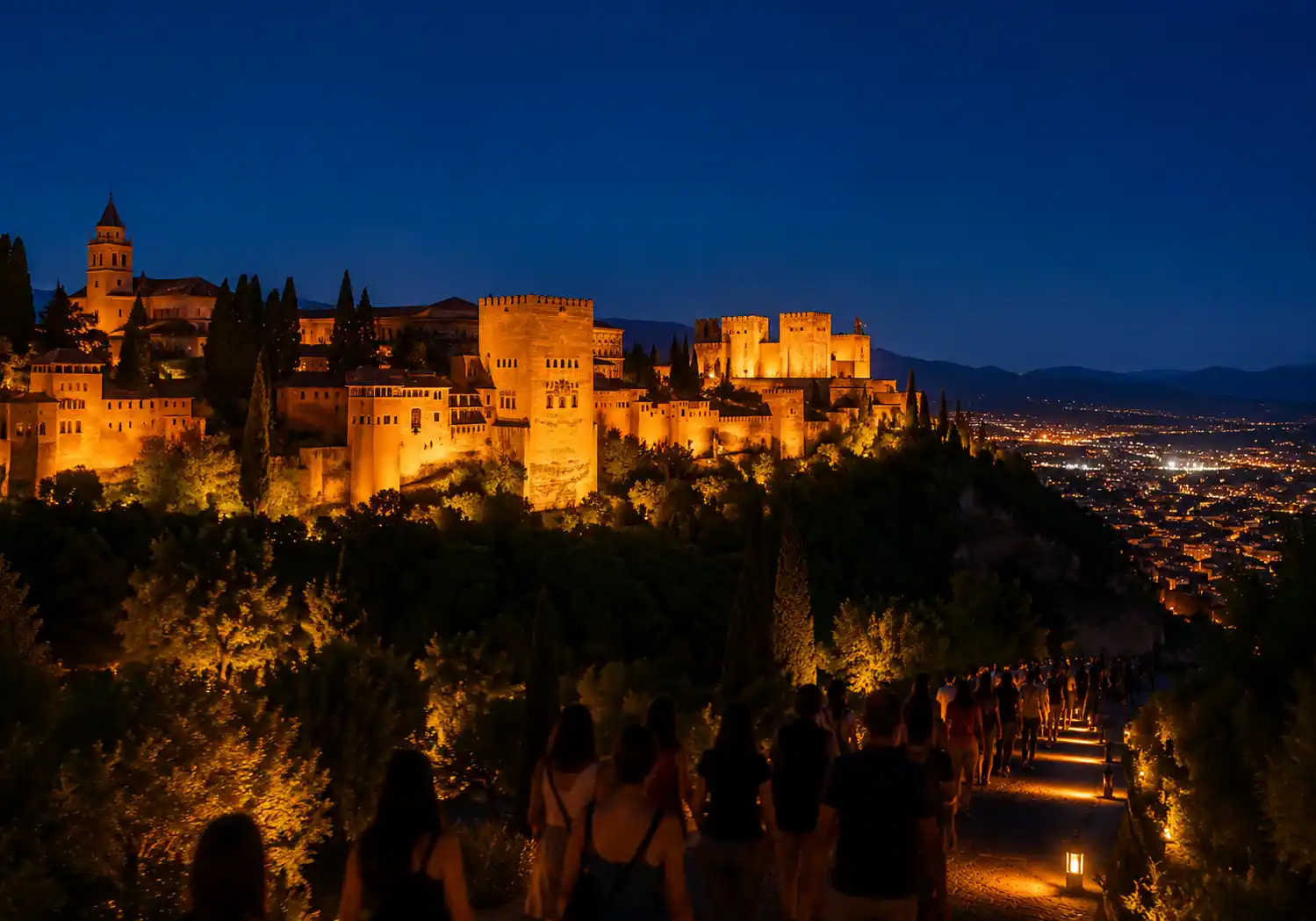
Alhambra Night Tour Attendance Revenue: Visitor Trends and Economic Impact
The Alhambra, perched majestically above the city of Granada, stands as one of Spain’s most treasured cultural landmarks. While its daytime visits have long drawn millions, the night tour experience has emerged over the past decade as a distinct and increasingly lucrative segment of the monument’s overall visitor economy. Understanding the attendance patterns, revenue streams, and broader economic ripple effects of the Alhambra’s night tours offers a fascinating window into how heritage tourism is evolving in the 21st century.
The Rise of Nocturnal Heritage Tourism
The Alhambra’s night tour program was introduced as a deliberate strategy to manage overwhelming daytime demand while simultaneously creating a more intimate, atmospheric visitor experience. What began as a niche offering has grown into a significant operational pillar for the Patronato de la Alhambra y Generalife, the governing body responsible for the monument’s management and preservation.
Night tours operate in two distinct modalities: the Nasrid Palaces circuit and the Generalife Gardens and Alcazaba circuit. Each route accommodates limited groups, typically capped at around 300 to 400 visitors per evening across multiple time slots. This deliberate scarcity — a fraction of the roughly 6,000 daily visitors the monument welcomes during daytime hours — creates an exclusivity that commands premium pricing and generates reliable sell-out rates throughout much of the year.
Seasonal Attendance Dynamics
Attendance figures for the Alhambra night tours follow pronounced seasonal rhythms that mirror Granada’s broader tourism calendar. Peak months — April through October — consistently see near-capacity bookings, with tickets often selling out weeks in advance. The summer months of July and August, despite scorching daytime temperatures, prove especially popular for evening visits as the cooler night air combines with dramatically illuminated architecture to create an unforgettable experience.
Winter months present a more nuanced picture. While attendance dips naturally due to shorter days and colder weather, the intimate nature of night tours means that even during the low season, occupancy rates rarely fall below 60 to 70 percent. Christmas holiday periods and the New Year week reliably produce spikes in demand, as travelers seek unique seasonal experiences. The shoulder seasons of March and November have grown steadily as savvy travelers increasingly target these periods for a less crowded yet equally atmospheric visit.
Revenue Architecture and Pricing Strategy
The revenue generated by Alhambra night tours flows through a carefully calibrated pricing structure designed to balance accessibility with preservation funding. Night tour tickets are priced at a premium compared to general daytime admission, typically ranging between €8 and €10 per adult for a single circuit, with combination or special-access tickets commanding higher rates.
This premium pricing serves multiple strategic purposes. First, it acts as a natural demand-management tool, filtering for visitors who place high value on the experience and are more likely to engage deeply with the site’s cultural significance. Second, it generates per-visitor revenue that substantially exceeds daytime equivalents, contributing disproportionately to the monument’s overall financial health. Third, the pricing structure supports the operational costs unique to nighttime operations — specialized lighting systems, extended staffing hours, enhanced security protocols, and the meticulous conservation measures required when illuminating centuries-old plasterwork and tile.
Direct Revenue Streams
Beyond ticket sales, the night tour ecosystem supports several complementary revenue channels. On-site bookshops and gift shops extend their hours on evenings when tours operate, capturing visitor spending on specialized publications, reproduction ceramics, and exclusive merchandise that ties directly to the nocturnal experience. Audio guide rentals, available in multiple languages, generate additional per-visitor income with minimal marginal cost. Some premium night tour packages now include guided experiences led by art historians or architects, commanding significant price premiums while deepening the educational value of the visit.
The cumulative direct revenue from night tour operations has grown steadily, with annual figures estimated in the range of several million euros — a meaningful contribution to an institution whose total annual revenue from all sources typically exceeds €40 million. Importantly, this revenue is ring-fenced for the preservation and enhancement of the monument itself, creating a virtuous cycle where visitor spending directly funds the conservation that makes future visits possible.
Broader Economic Impact on Granada
The economic significance of Alhambra night tours extends well beyond the monument’s own balance sheet. Evening visitors generate substantial ancillary spending throughout Granada’s local economy, creating a multiplier effect that ripples through the city’s hospitality, dining, and retail sectors.
Hospitality and Accommodation
Night tour visitors disproportionately stay overnight in Granada compared to day-trippers who may visit the Alhambra en route to other destinations. This translates into hotel bookings, Airbnb stays, and guesthouse occupancy that supports thousands of jobs across the city’s accommodation sector. Hotels in the Albaicín and city center neighborhoods report measurable occupancy lifts on evenings when night tours operate, with many properties now offering package deals that bundle accommodation with guaranteed night tour tickets — a compelling value proposition given the tours’ tendency to sell out.
Dining and Evening Economy
The timing of night tours — typically with entry slots between 8:00 PM and 10:30 PM depending on the season — creates natural synergies with Granada’s celebrated tapas culture. Visitors often arrange pre-tour dinners or post-tour drinks in the city’s historic center, contributing to a vibrant evening economy that extends late into the night. Restaurants, bars, and cafés within walking distance of the Alhambra’s access points benefit most directly, with some establishments reporting that night tour evenings outperform standard evenings by 15 to 25 percent in terms of covers and revenue.
Local tour operators and transportation services also capture value from the night tour ecosystem. Private transfer services, taxi operators, and the city’s minibus routes to the Alhambra hill see elevated evening demand. Specialized tour companies now curate complete nocturnal Granada experiences — flamenco performances paired with Alhambra night visits, or sunset viewing at the Mirador de San Nicolás followed by the Nasrid Palaces circuit — creating premium experiential products at significantly higher price points than standalone tickets.
Operational Sustainability and Preservation Funding
One of the most compelling arguments for the continued expansion and refinement of the night tour program lies in its contribution to the monument’s long-term preservation. The Alhambra faces unrelenting conservation challenges: centuries-old plasterwork is vulnerable to humidity fluctuations, wooden ceilings require constant monitoring for pest activity, and the sheer volume of foot traffic through narrow medieval passages places physical stress on historic flooring and structures.
Revenue from night tours, precisely because it is generated at premium margins with lower visitor volumes, represents an especially efficient funding mechanism for conservation work. Each night tour ticket sold contributes a higher proportion of its face value to preservation coffers than a daytime ticket, given the reduced wear-and-tear costs associated with smaller group sizes. The Patronato has increasingly directed night tour revenues toward specific high-profile restoration projects, including the ongoing conservation of the Patio de los Leones’ marble fountain and the delicate restoration of muqarnas vaulting in the Sala de los Abencerrajes.
Technology-Driven Visitor Management
Recent investments in digital ticketing infrastructure have enhanced both the visitor experience and the monument’s ability to capture and analyze attendance data. Real-time booking platforms now provide granular visibility into demand patterns, enabling dynamic adjustments to time-slot allocation and helping to smooth visitor flows across peak and off-peak periods. QR-code-based entry systems reduce queuing times and minimize staffing requirements at access points, while also generating rich datasets on visitor origins, booking lead times, and ancillary purchase behavior.
These technological capabilities have proven especially valuable for the night tour program, where precisely managed group sizes and time slots are critical to maintaining the intimate atmosphere that defines the experience. Data analytics now inform everything from seasonal capacity adjustments to marketing campaign targeting, with the Patronato increasingly able to identify and reach potential visitors in specific geographic markets during periods of soft demand.
Competitive Positioning in European Heritage Tourism
The Alhambra’s night tour program occupies a distinctive position within the broader landscape of European heritage tourism. While many major monuments offer occasional evening openings — the Vatican Museums’ Friday night sessions, the Tower of London’s “Ceremony of the Keys,” or the Acropolis’ summer full-moon events — few have developed as systematic and commercially significant a nocturnal operation as the Alhambra.
This competitive advantage stems partly from the site’s unique physical characteristics. The Nasrid Palaces’ intricate stucco work, carved wooden ceilings, and reflective water features reveal entirely different aesthetic dimensions under artful illumination. Shadows animate geometric patterns that appear static in daylight; the famous Courtyard of the Myrtles takes on a mirror-like quality that daytime visitors never witness. These intrinsic qualities, combined with disciplined operational execution, have made the Alhambra night tour a benchmark against which other heritage sites measure their own evening visitation strategies.
Future Trajectories and Challenges
Looking ahead, the Alhambra night tour program faces both opportunities and constraints. On the opportunity side, the global trend toward experiential travel continues to favor precisely the kind of intimate, atmospheric, and exclusive experience that night tours deliver. Emerging source markets — particularly from Asia and the Americas — show growing appetite for premium cultural tourism products. The increasing sophistication of digital marketing enables highly targeted promotion to these demographics with messages calibrated to the unique appeal of nocturnal heritage experiences.
On the constraint side, the physical limitations of the monument are absolute. The Nasrid Palaces cannot accommodate meaningfully larger groups without degrading the visitor experience and accelerating wear on fragile interiors. Expansion of night tour capacity must therefore come from extending the seasonal calendar, adding time slots within existing evenings, or developing new circuits that distribute visitors across less-congested areas of the complex. Each of these approaches carries trade-offs in terms of operational costs, conservation impact, and the delicate balance between access and preservation.
Climate change presents another evolving challenge. Granada’s summer temperatures have trended upward, making evening visits increasingly attractive — but also raising energy costs for the climate-control systems that protect the palaces’ interiors. The Patronato has begun exploring renewable energy integration and more efficient lighting technologies, including LED systems that reduce both energy consumption and the heat load on sensitive surfaces.
Conclusion
The Alhambra night tour program represents a sophisticated intersection of cultural heritage management, tourism economics, and urban development strategy. Its attendance figures tell a story of disciplined growth within carefully managed constraints. Its revenue streams demonstrate how premium pricing, when coupled with genuinely distinctive experiences, can generate substantial resources for preservation. And its broader economic impact underscores the role that well-managed heritage attractions play as engines of sustainable local development.
For Granada, the illuminated silhouette of the Alhambra against the night sky is more than an iconic image — it is a symbol of how the city has successfully leveraged its greatest cultural asset to create value that extends far beyond ticket sales. As heritage tourism continues to evolve, the Alhambra’s night tours offer a compelling model of how ancient monuments can remain economically vibrant and culturally relevant in a rapidly changing world.
About the Author: A seasoned travel writer and cultural heritage analyst with over a decade of experience covering Spain’s historic landmarks, Isabella Drayton has walked the Alhambra’s moonlit courtyards more times than she can count. When not tracing the footsteps of Nasrid sultans, she can be found exploring Andalusia’s hidden white villages with a notebook in one hand and a glass of tinto de verano in the other.