
Why Did Delta Connection DL3543 Make an Emergency Landing?
Incident Overview
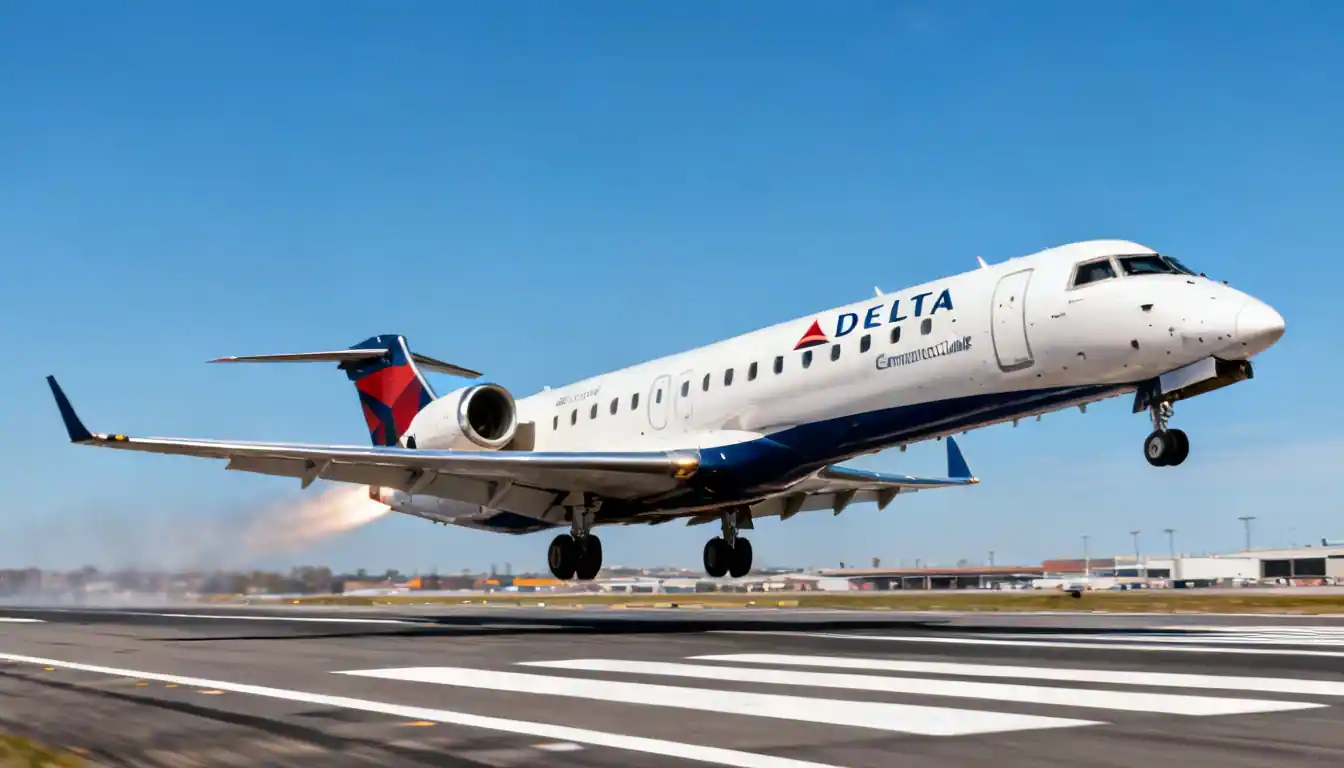
On the morning of July 10, 2026, Delta Connection flight DL3543 — operated by Endeavor Air — made an unscheduled emergency landing shortly after departing from John F. Kennedy International Airport (JFK) in New York. The aircraft, a Bombardier CRJ-900 regional jet, was bound for Raleigh-Durham International Airport (RDU) when the flight crew reported a mechanical issue and requested an immediate return to JFK.
The aircraft landed safely at approximately 10:15 a.m. Eastern Time, roughly 25 minutes after takeoff. No injuries were reported among the 70 passengers and four crew members aboard. Emergency response vehicles met the aircraft on the runway as a standard precautionary measure, and passengers were deplaned normally before being rebooked on alternative flights to their destinations.
What Triggered the Emergency?
A Cabin Pressurization Failure
According to preliminary statements from Endeavor Air and the Federal Aviation Administration (FAA), the primary reason for the emergency declaration was a cabin pressurization malfunction. The flight crew received an alert indicating that the aircraft was not maintaining proper cabin pressure as it climbed through approximately 18,000 feet.
Cabin pressurization is critical for passenger safety and comfort. At cruising altitudes of 30,000 feet and above, the outside air pressure is far too low for humans to breathe comfortably — or even remain conscious. A pressurization failure means the cabin cannot maintain a safe, breathable atmosphere, forcing pilots to descend rapidly to an altitude where supplemental oxygen is not required.
How the Crew Responded
The flight crew on DL3543 followed standard operating procedures with textbook precision. After receiving the pressurization warning, they:
- Declared an emergency with air traffic control, using the code “7700” on the aircraft’s transponder — the universal squawk code for an emergency situation.
- Initiated a controlled descent to 10,000 feet, where cabin pressurization is no longer critical.
- Coordinated with JFK tower for priority landing clearance.
- Communicated clearly with passengers about the situation and what to expect.
Aviation safety experts who reviewed the incident praised the crew’s handling of the situation, noting that their swift decision to return to JFK rather than attempting to continue to Raleigh demonstrated sound risk management.
Aircraft and Operator Background
Endeavor Air and the CRJ-900
Endeavor Air is a wholly owned subsidiary of Delta Air Lines and one of the largest regional carriers in the United States. The airline operates a fleet of over 180 Bombardier CRJ-series aircraft under the Delta Connection brand, connecting smaller markets to Delta’s major hubs.
The CRJ-900 involved in this incident — registration N324PQ — is approximately eight years old and had passed all recent scheduled maintenance inspections. The aircraft is powered by two General Electric CF34-8C5 turbofan engines and has a maximum seating capacity of 76 passengers in a two-class configuration.
Maintenance History and Safety Record
Endeavor Air maintains a strong safety record, and incidents requiring emergency landings are statistically rare across its operations. The CRJ-900 itself is a proven regional jet platform with over two decades of operational history and millions of flight hours logged globally. Aviation databases indicate that cabin pressurization issues, while uncommon, are among the more frequently reported mechanical anomalies across all regional jet operators — not unique to Endeavor Air or the CRJ-900.
Passenger Experience: What Happened Inside the Cabin
Initial Moments of Uncertainty
Passengers aboard DL3543 described the experience as unsettling but ultimately well-managed. According to social media posts and brief interviews shared after the incident, the flight initially appeared routine. Roughly 15 minutes after takeoff, passengers noticed the aircraft leveling off and then beginning what felt like a descent — well before reaching cruising altitude.
Some passengers reported feeling ear discomfort associated with pressure changes, which can occur during rapid altitude adjustments. The flight crew addressed the cabin promptly, explaining that a technical issue required returning to JFK and that the situation was under control.
Landing and Aftermath
The landing at JFK was described as smooth and uneventful. Fire trucks and emergency vehicles were visible on the runway as a precaution, which is standard protocol for any aircraft that declares an in-flight emergency. Passengers remained on board for a short period before deplaning through a jet bridge at a domestic terminal gate.
Delta’s customer service teams rebooked affected passengers on later flights to Raleigh-Durham, with many arriving at their destination approximately three to four hours behind their original schedule. The airline provided meal vouchers and, in some cases, compensation for the disruption.
FAA Investigation: What Comes Next?
The Investigative Process
The FAA has opened a standard investigation into the DL3543 pressurization event. The process typically involves:
- Data retrieval: Downloading and analyzing the flight data recorder (FDR) and cockpit voice recorder (CVR) to reconstruct the exact sequence of events.
- Physical inspection: A thorough examination of the aircraft’s pressurization system, including outflow valves, cabin pressure controllers, door seals, and the bleed air system from the engines.
- Maintenance records review: Scrutinizing the aircraft’s recent maintenance history to identify any prior issues or repairs related to the pressurization system.
- Crew interviews: Gathering firsthand accounts from the pilots and flight attendants about what they observed and how they responded.
Timeline for Findings
Preliminary findings from such investigations typically emerge within two to four weeks. A final report — particularly if the incident reveals a systemic issue affecting other aircraft — could take several months. The FAA will determine whether any airworthiness directives or fleet-wide inspections are necessary based on its findings.
How Common Are Cabin Pressurization Emergencies?
Statistical Context
Cabin pressurization events are among the more frequently reported in-flight anomalies, though the vast majority are resolved without incident. The FAA’s Aviation Safety Information Analysis and Sharing (ASIAS) database records dozens of pressurization-related events annually across U.S. carriers, but emergency landings specifically attributable to pressurization failure occur far less frequently — perhaps a handful of times per year across all U.S. airlines combined.
Comparing to Other Emergency Landing Causes
To put DL3543’s situation in perspective, the most common triggers for emergency landings across commercial aviation include:
| Cause | Approximate Frequency |
|---|---|
| Medical emergencies (passenger or crew) | Most common |
| Mechanical anomalies (engine, hydraulics, pressurization) | Second most common |
| Smoke or fire indications | Less common |
| Security concerns | Rare |
Pressurization-related emergencies sit firmly in the mechanical anomaly category and are generally considered manageable when crews respond promptly — as was the case with DL3543.
Safety Systems That Worked
Redundancy in Aviation Design
The DL3543 incident highlights the multiple layers of safety built into modern commercial aviation. Key systems that functioned as designed include:
- Pressurization monitoring sensors that detected the anomaly early, before the cabin environment became unsafe.
- The 7700 transponder code, which immediately alerted air traffic control to the emergency and triggered priority handling.
- Crew training protocols, which gave the pilots a clear, practiced framework for diagnosing the issue and executing the safest course of action.
- Oxygen mask deployment systems, which were on standby and ready to activate if cabin pressure had dropped further — though they were not needed in this case.
Why This Matters for Passenger Confidence
For nervous flyers, incidents like DL3543 can seem alarming when viewed through headlines alone. However, aviation safety professionals consistently emphasize that emergency landings are not crashes — they are preventative measures. The flight crew’s decision to return to JFK represents the system working exactly as intended: identify a problem, prioritize safety, and land at the nearest suitable airport without delay.
Key Takeaways from DL3543
The Delta Connection DL3543 emergency landing serves as a case study in aviation safety done right. A mechanical issue was detected early, the crew followed established procedures without hesitation, and the aircraft landed without incident. The FAA’s ongoing investigation will provide greater clarity on the root cause of the pressurization failure, which may in turn inform maintenance practices across the regional jet fleet.
For the 70 passengers aboard, the morning of July 10 delivered an unexpected detour — but also a powerful reminder of the robust safety culture that undergirds every commercial flight in the United States. In an era where air travel can feel routine, incidents like this underscore that safety is never taken for granted. It is engineered, trained, and rehearsed at every level of the operation — and when it matters most, it works.